
Neuroinformatics
Our lab combines computer science and neuroscience to develop and maintain a wide range of software packages and resources for modeling and analysing neural systems.

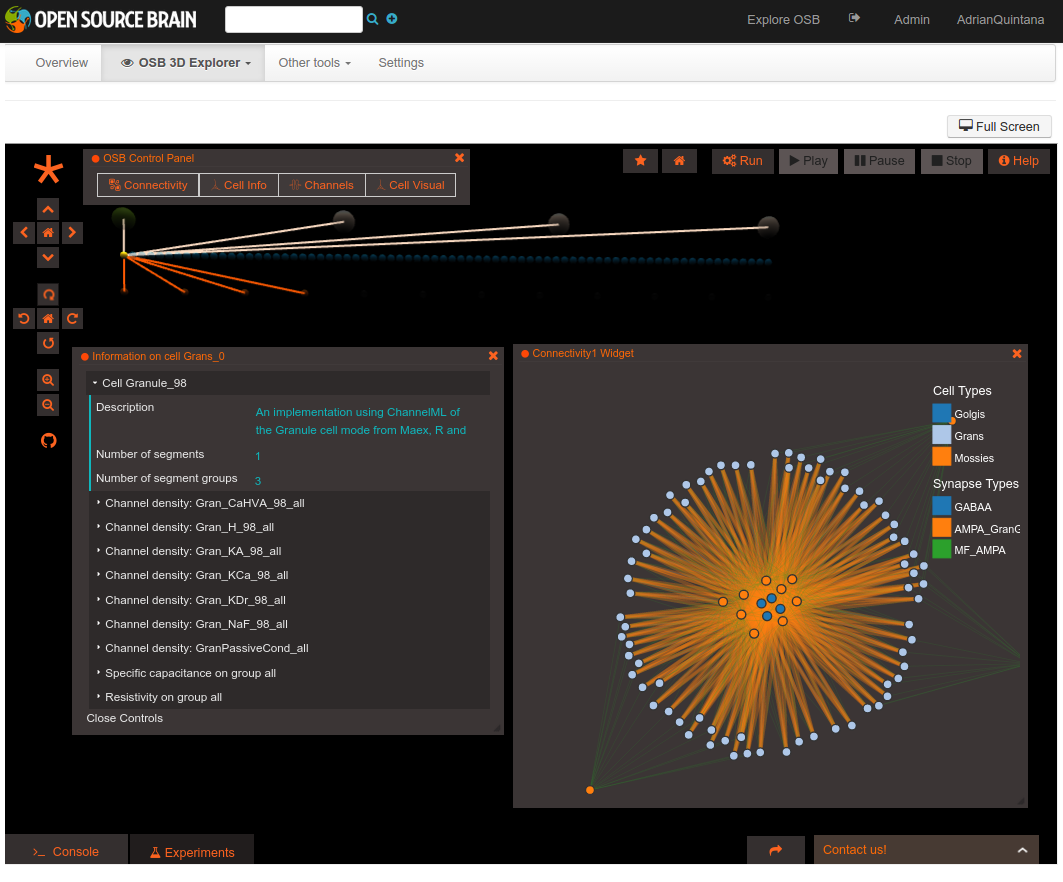
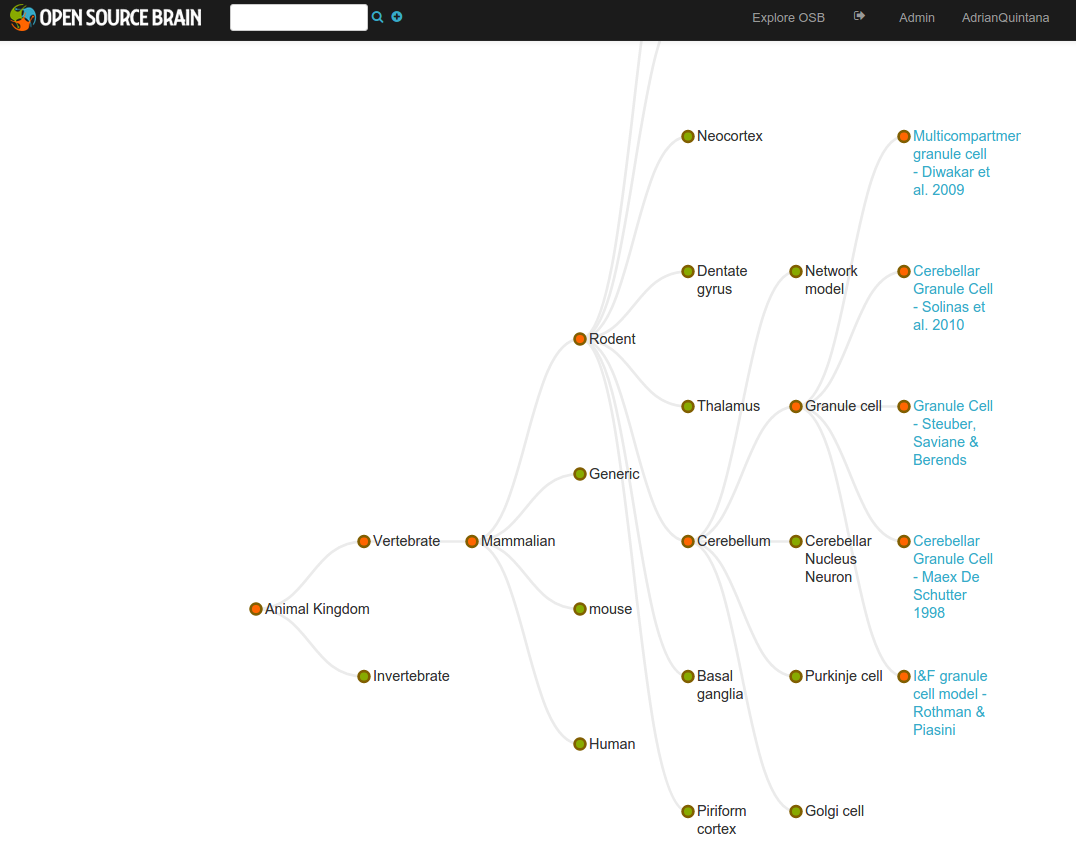
Open Source Brain (OSB) is a web-based framework for developing, disseminating and simulating models of neural systems. Models on the OSB repository are defined in a standardised machine readable language, enabling them to be automatically transformed into a human friendly format that can be visualized through the browser. Moreover, the latest release of OSB enables simulations to be run from the browser without the need to install any software, making their functional properties of models accessible. Another key feature of models on OSB is that they can evolve with time to accommodate new experimental findings, the latest modelling paradigms, simulator technology development or simply bug fixes. While the models can be collaboratively developed on OSB in any simulator format, the ultimate aim is to get as much of the model as possible into a standardised form (e.g. NeuroML see below) to ensure modularity, accessibility and cross simulator portability.
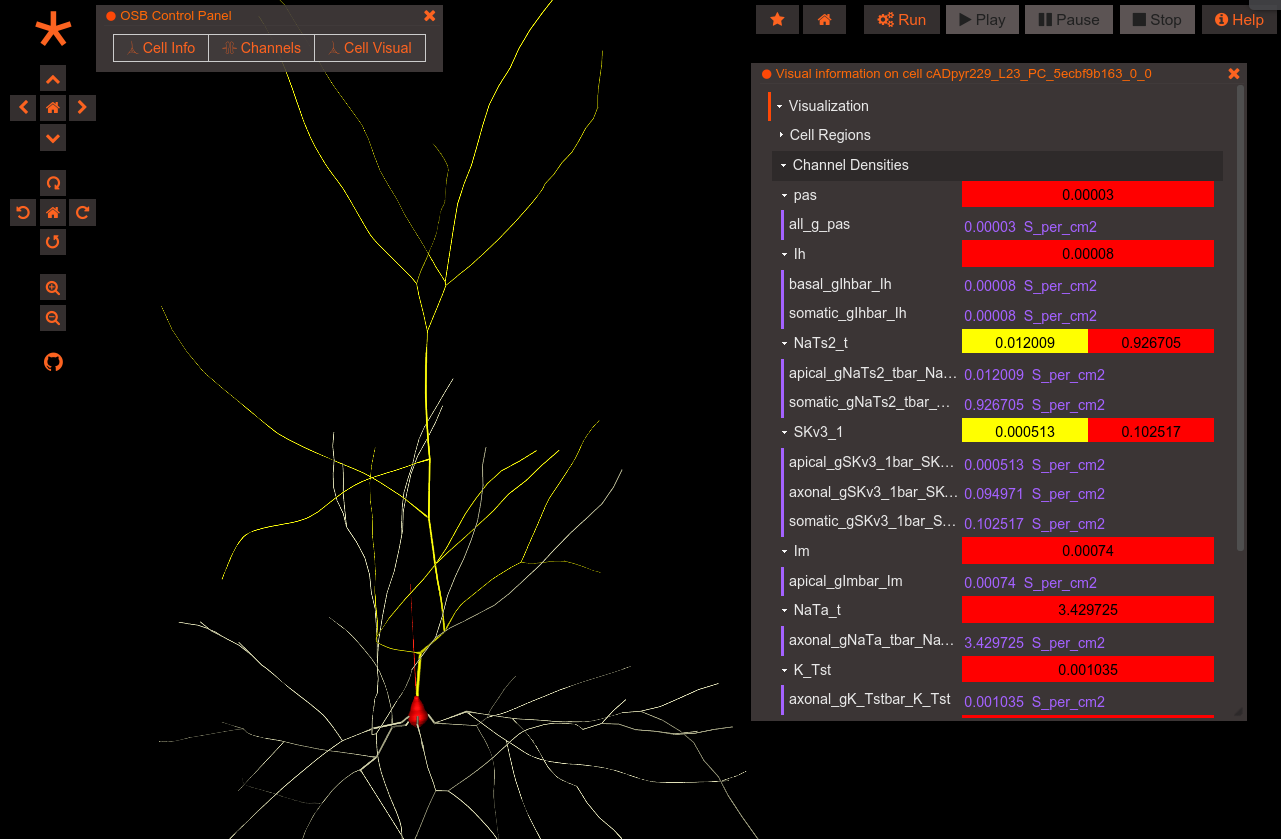
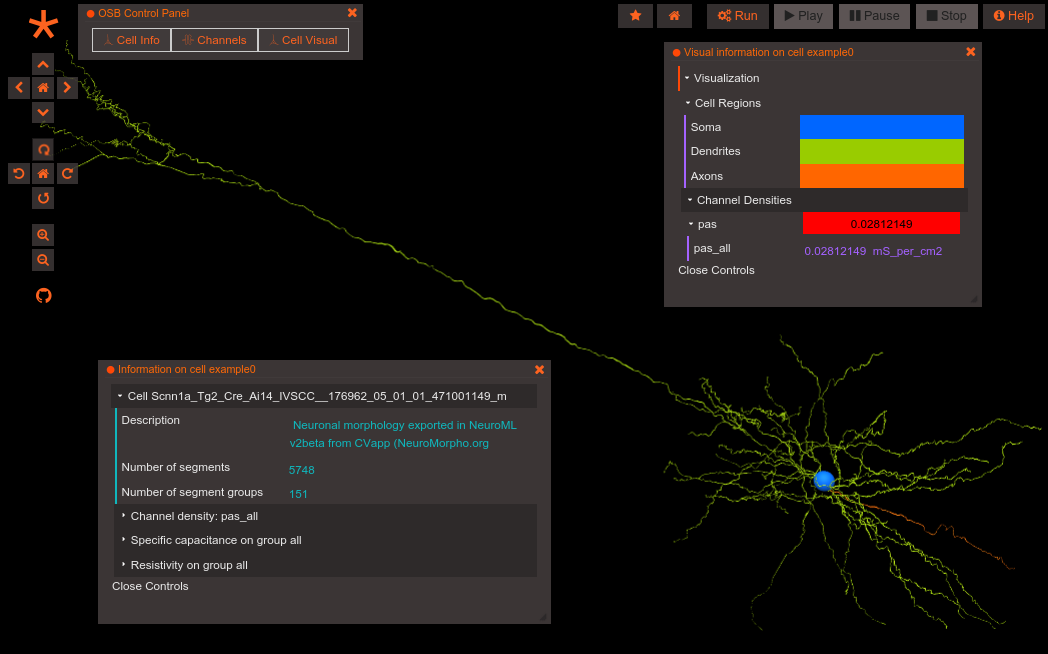
Browser based visualization of the biophysical properties of cells and channels on OSB. 3D view of a L2/3 pyramidal cell from the BBP Neocortical Microcircuit. Widget on right shows the conductances distributed on the cell. One (SKv3_1) is highlighted and the distribution of this conductance is shown on the cell, with red for high density, yellow for low density, white for zero density. All information has been extracted from the NeuroML 2 description of the cell. See the model at OSB and click on Cell Visual.
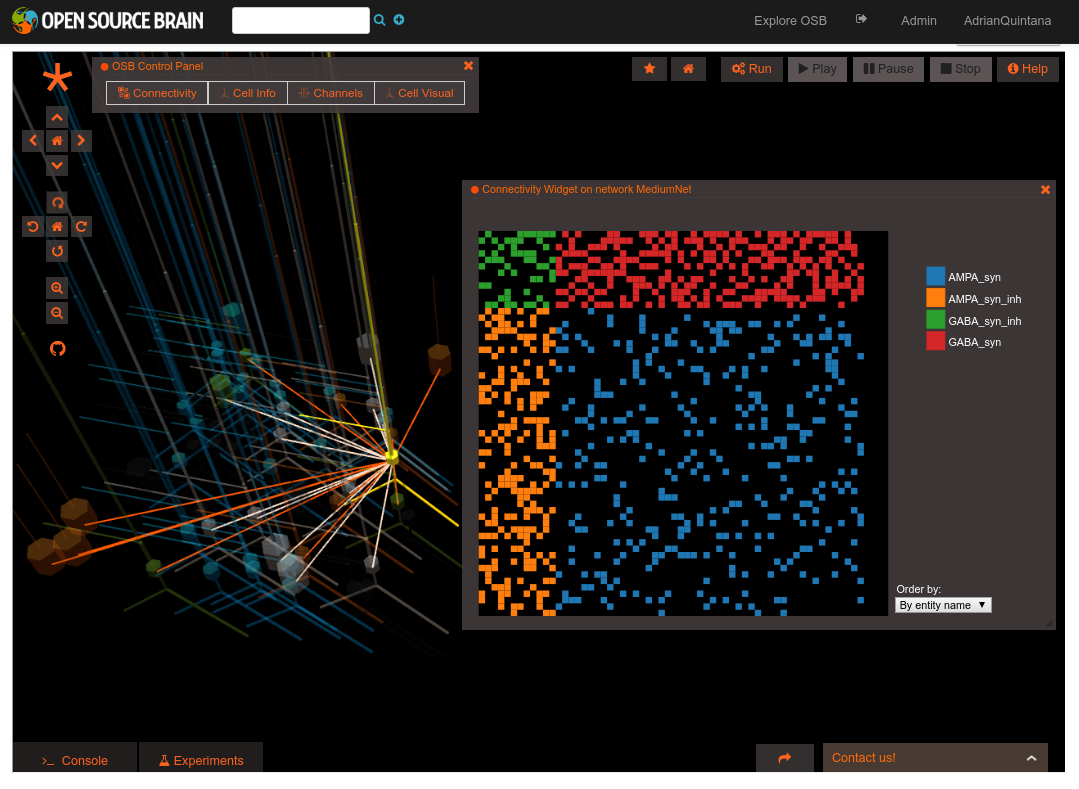
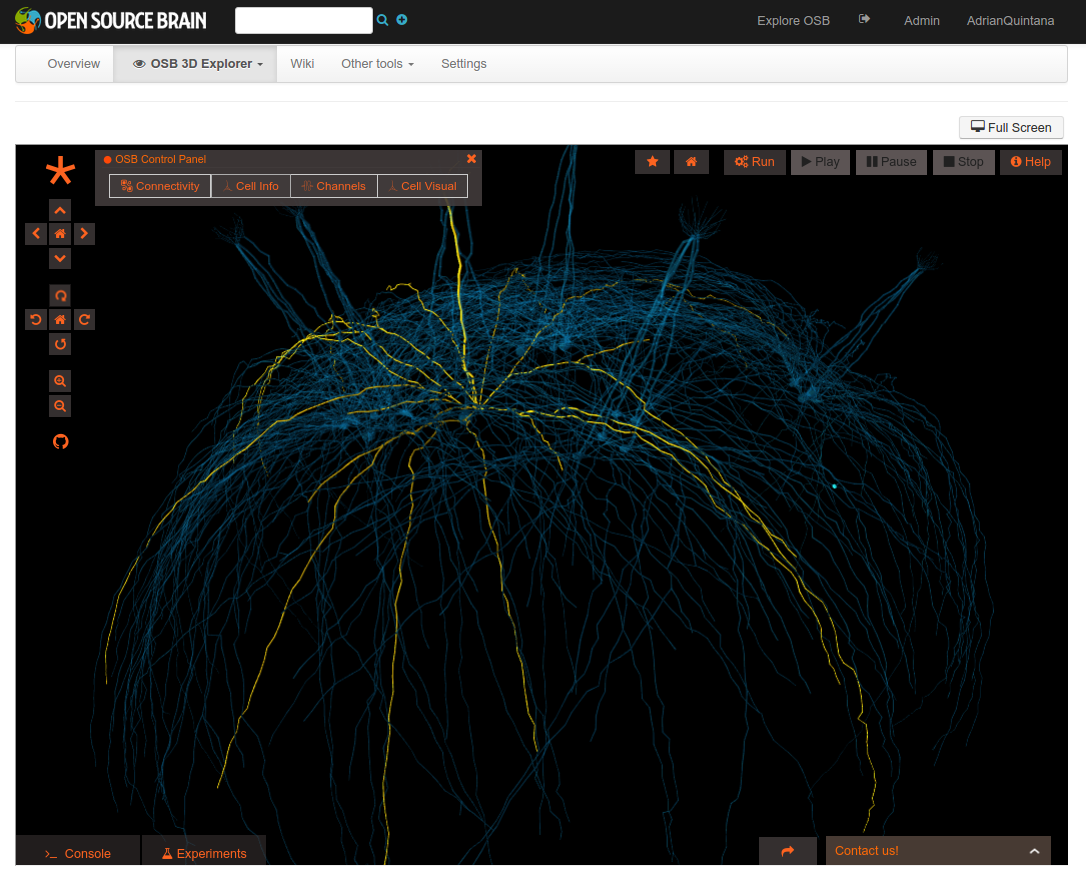
OSB visualization of network connectivity. Network based on the auditory cortex model of David Beeman, University of Colorado, consisting of 48 pyramidal cells and 12 basket cells. An interactive widget for displaying connections is shown. See the model at OSB and click on Connectivity.
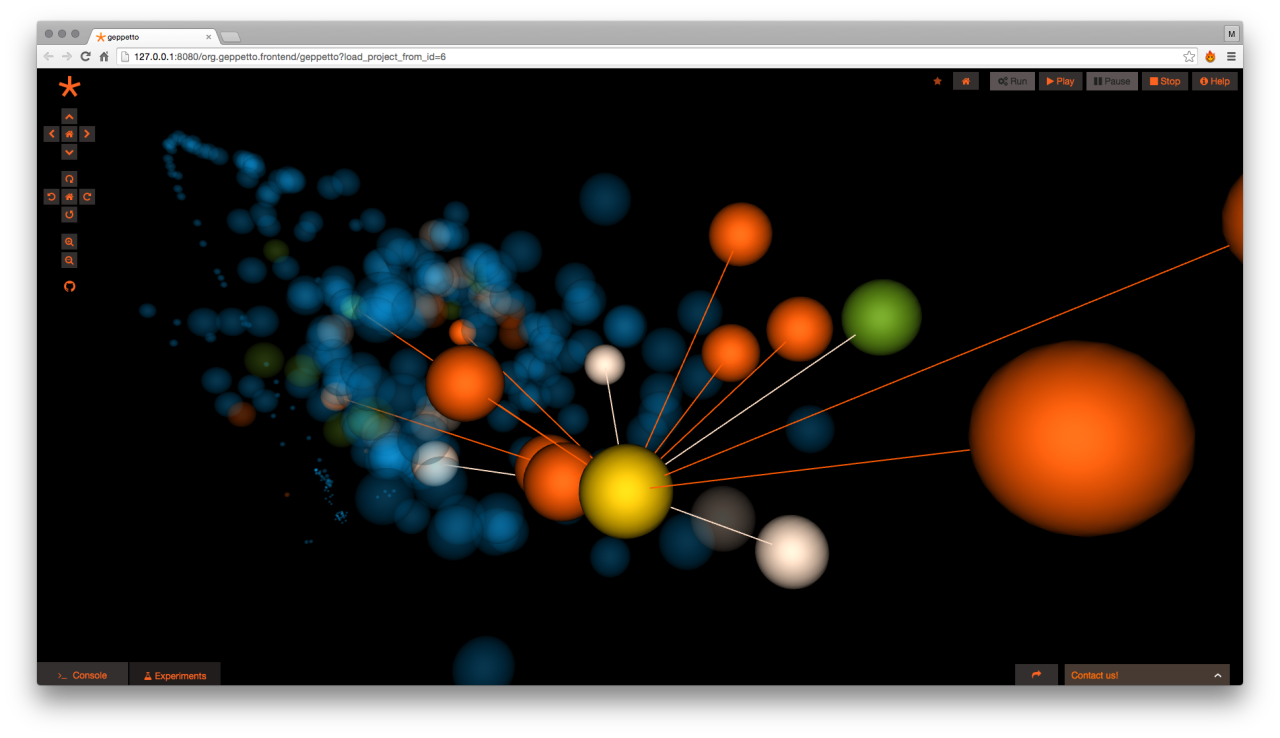
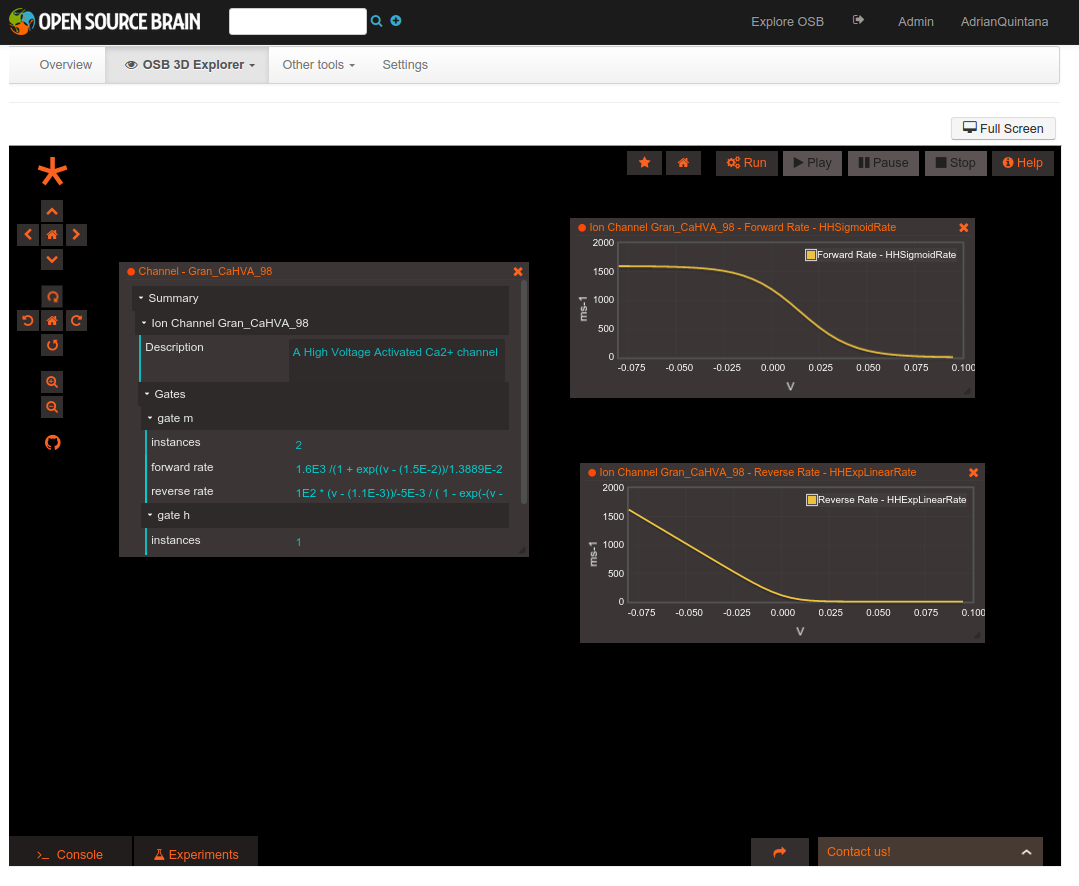
OSB currently hosts more than 150 projects, has over 1000 registered users, and 50 member labs. The majority of its features are accessible to non-registered users. If a specific model has been converted to NeuroML2 the user can make use of a wide range of advanced features in the Open Source Brain 3D explorer. The OSB 3D explorer is a graphical framework for analysis and simulation of neural models based on Geppetto, an open source modular platform for complex biological systems that is also used in the Open Worm project.
Models of the nervous system are implemented using a diverse set of approaches, simulation tools and languages making them inaccessible and difficult to reproduce. We have taken a leading role in the development of NeuroML (Gleeson et al., 2010) a model specification language for computational neuroscience. This declarative, XML-based language can describe kinetic models of channels, synaptic dynamics, complex cell morphologies as well as network connectivity and gross anatomy in a standardised format. The latest version of NeuroML is underpinned by LEMS (Cannon et al., 2014), a fully machine readable hierarchical language that can define the structure and dynamics of a wide range of biophysical models. Models defined in the NeuroML2/LEMS framework can be automatically transformed into domain specific languages enabling simulations to be performed and models to be presented in a human readable format. These properties of NeuroML2 are used by OSB to expose the inner structure of models and to perform simulations in an accessible and transparent manner. In addition to OSB, NeuroML is being used in a wide range of tools, resources and projects including NeuroMorpho, the Human Brain Project and the OpenWorm Project.
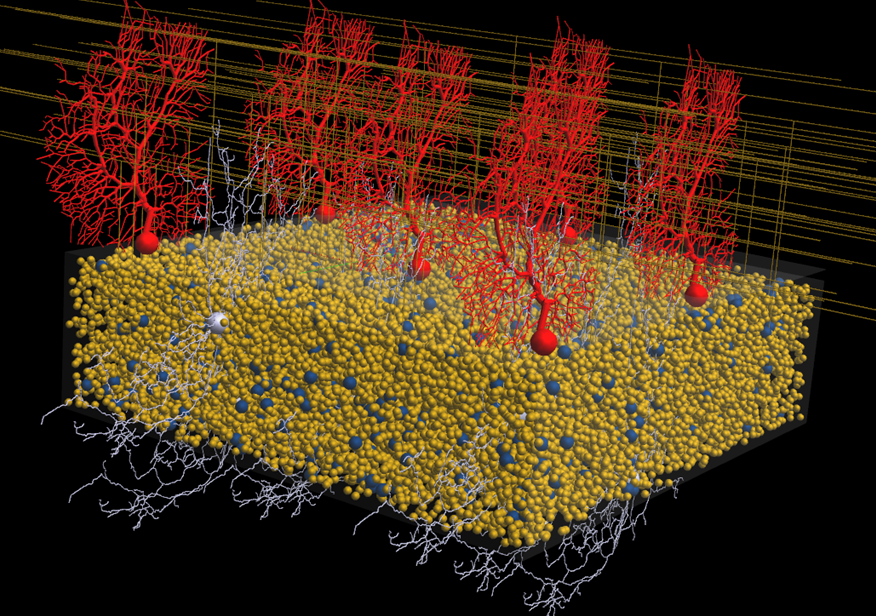
Network model of the cerebellum created with neuroConstruct. Cells include granule cells (gold), Purkinje cells (red) and Golgi cells (white).
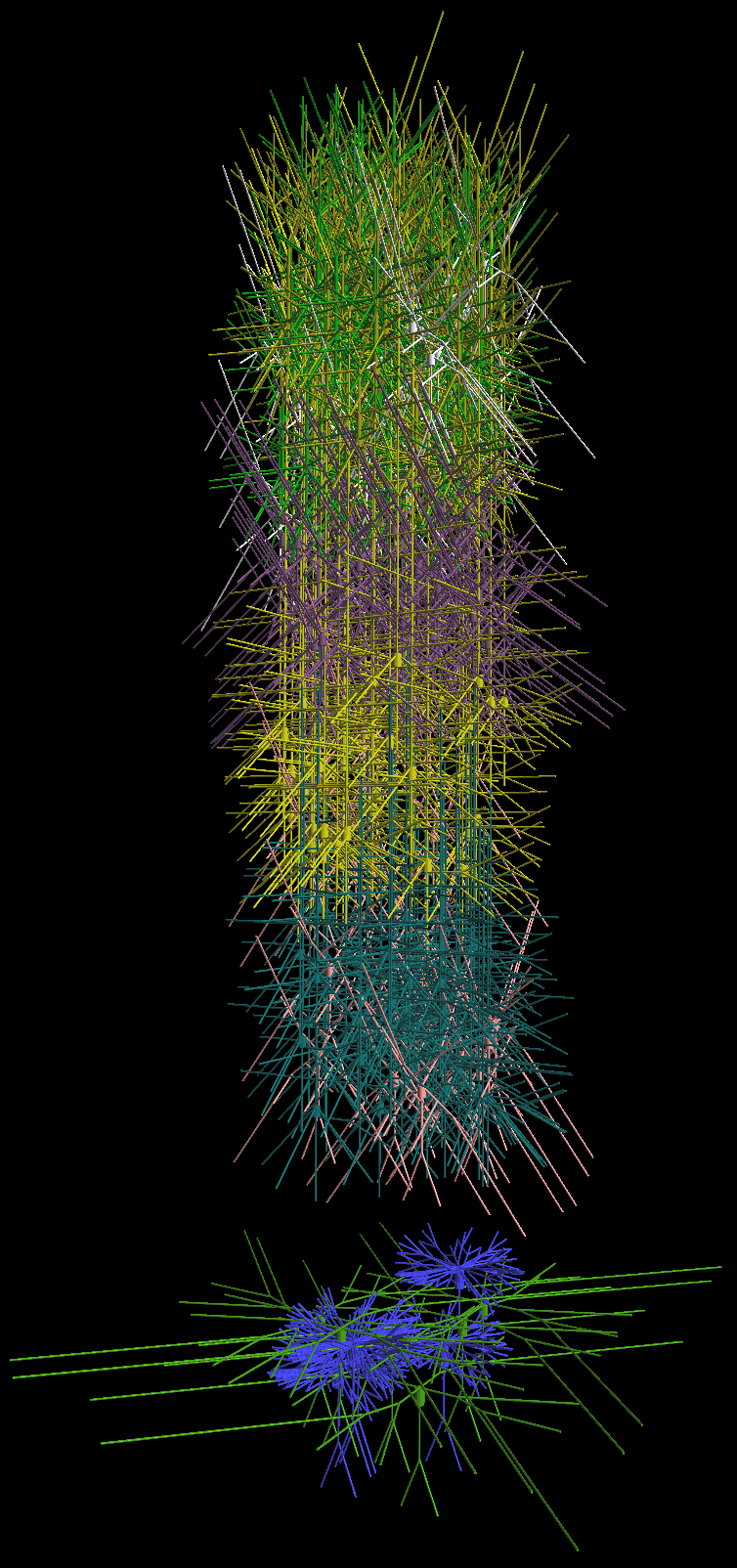
Network model of a cortical column created with neuroConstruct.
Biologically detailed network models are a powerful way to bridge the considerable gap in our understanding between low level mechanisms and high level network function. Unfortunately, models that incorporate cell morphologies, synaptic connectivity patterns and synaptic and neuronal properties are difficult to build.
To overcome this problem we have developed neuroConstruct, a software tool for constructing, visualizing and analyzing conductance-based neural network models in 3D space (Gleeson et al. 2007). This application allows the development of models with a much higher degree of biological detail than was previously possible (see image below). By automatically generating and managing the code of these complex models it also facilitates the exploration of parameter space through the generation of many realizations of a particular model.
We have used neuroConstruct to investigate the effects of synaptic short term plasticity on gain control in a detailed layer 5 pyramidal cell model with dendritically distributed excitatory and inhibitory synaptic input (Rothman et al. 2009). The current version of neuroConstruct has a Python interface for added flexibility and large-scale network models can now be set up and automatically managed on parallel computer architectures, features that we used to investigate the effects of electrical coupling on the desynchronization of an electrically coupled network of cerebellar Golgi cells (Vervaeke et al. 2010). Since its release neuroConstruct has been downloaded by over 2000 registered users in 40 different countries worldwide.
We have also recently used a realistic layer 5 pyramidal cell model in neuroConstruct to study how synaptic integration in the apical dendritic tuft is altered by the level of background network activity (Farinella et al 2014).

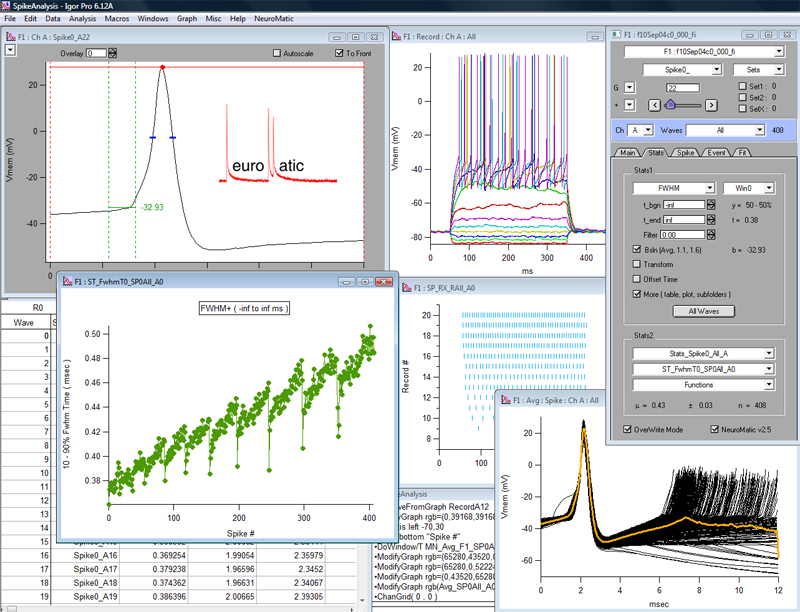
NeuroMatic is a widely used suite of functions in the IGOR PRO environment for electrophysiological data acquisition, analysis and simulation. NeuroMatic is platform independent (Mac or PC) and works with InstruTech/Heka or NIDAQ acquisition hardware. For data analysis, NeuroMatic makes it easy to compute transformations and statistical analyses, including scaling, filtering, alignment averaging, baseline subtraction, spike/EPSC detection, stationarity analysis, rise-time computations and more. NeuroMatic can also perform stochastic EPSC, integrate-and-fire and Hodgkin-Huxley-like simulations. NeuroMatic is freely available and has been downloaded by more than 3000 users around the world.
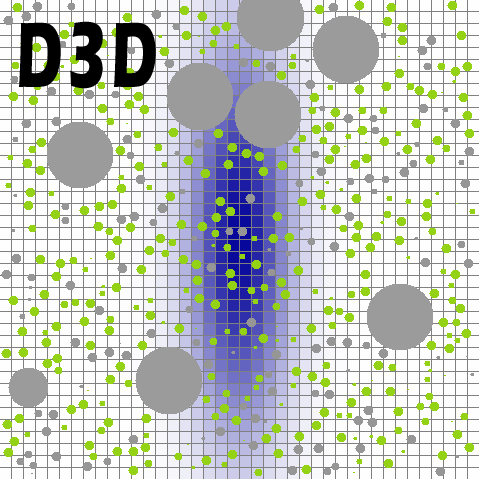
D3D is a Java-based 3D reaction-diffusion simulator that uses either an explicit finite-difference method similar to that described by Crank (1975) or a Monte Carlo algorithm for non-overlapping hard spheres that explicitly accounts for excluded volume effects (Cichocki and Hinsen, 1990). D3D has been used to simulate glutamate release in the synaptic cleft (Nielsen et al., 2004), glutamate uncaging (DiGregorio et al., 2007), calcium dynamics in the vicinity of voltage-gate calcium channel (VGCC) clusters (Nakamura et al., 2015; Nakamura et al., 2018), Brownian motion of synaptic vesicles, including steric and hydrodynamic interactions (Rothman et al., 2016) and synaptic vesicle dynamics near active zones, including connectors, tethers, docking and release (Rothman et al., 2016).
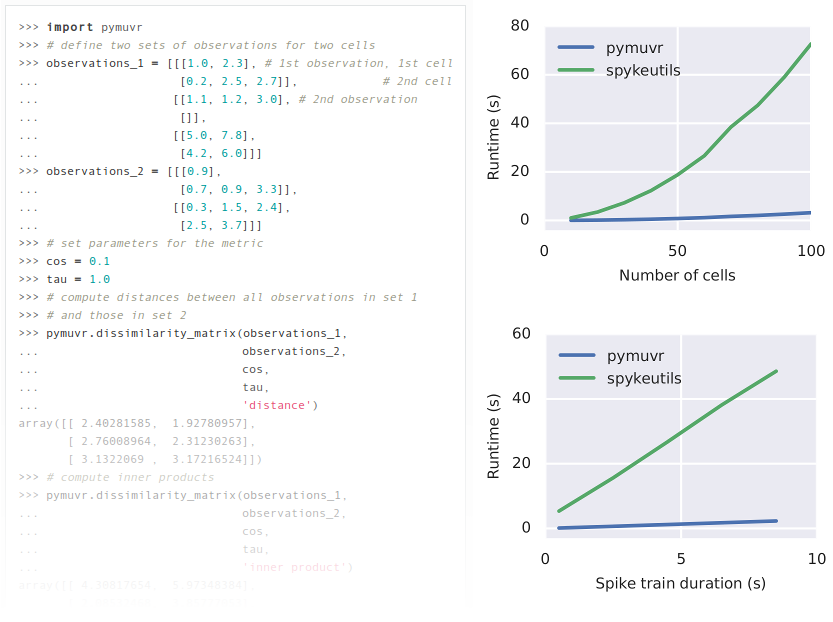
The software package pymuvr is a high performance Python package for the calculation of multi-unit Van Rossum neural spike train distances and inner products. It is built around a hand-optimised C++ implementaton of the kernel-based algorithm by Houghton and Kreuz (2012).
Research supported by: